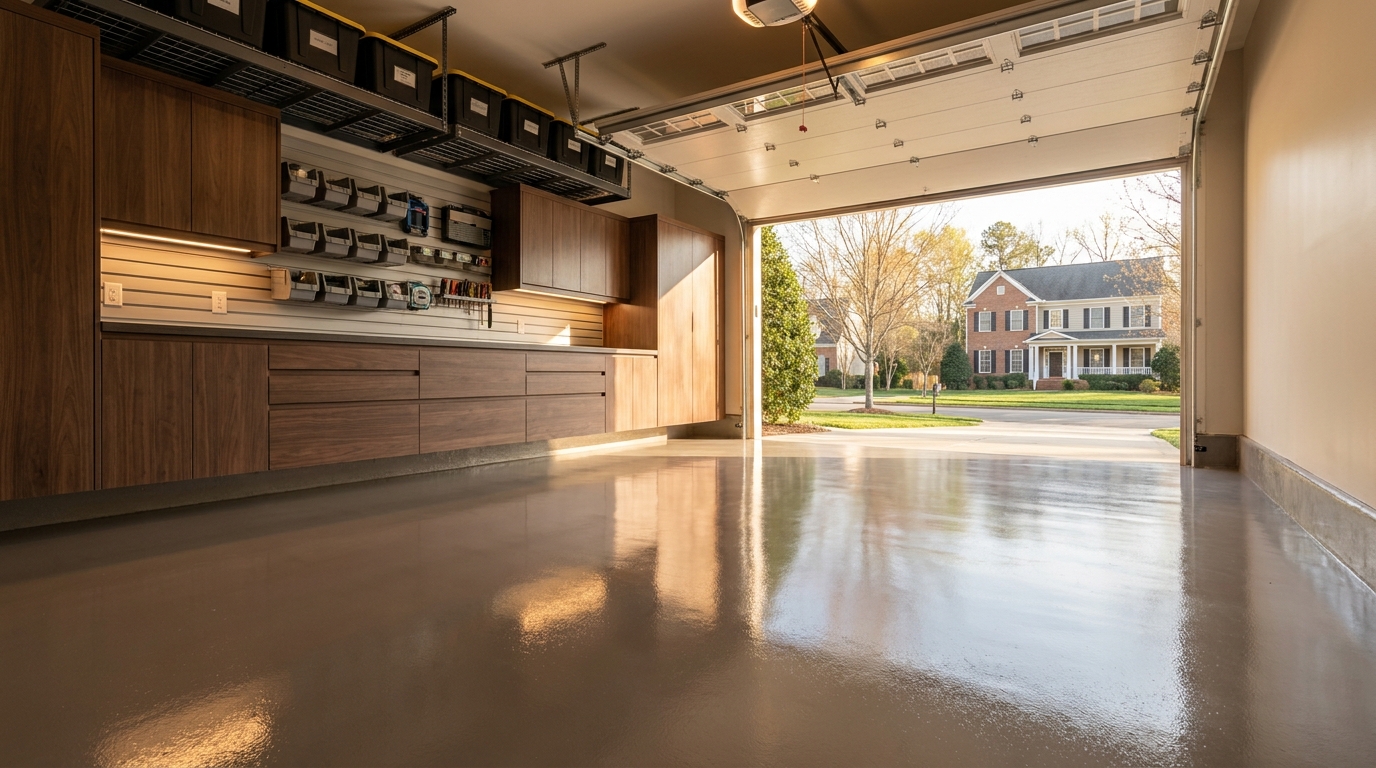
A garage floor cove base is the coating itself turning up the wall in a tooled curve. The floor meets cabinets as one finished surface instead of a raw slab edge.
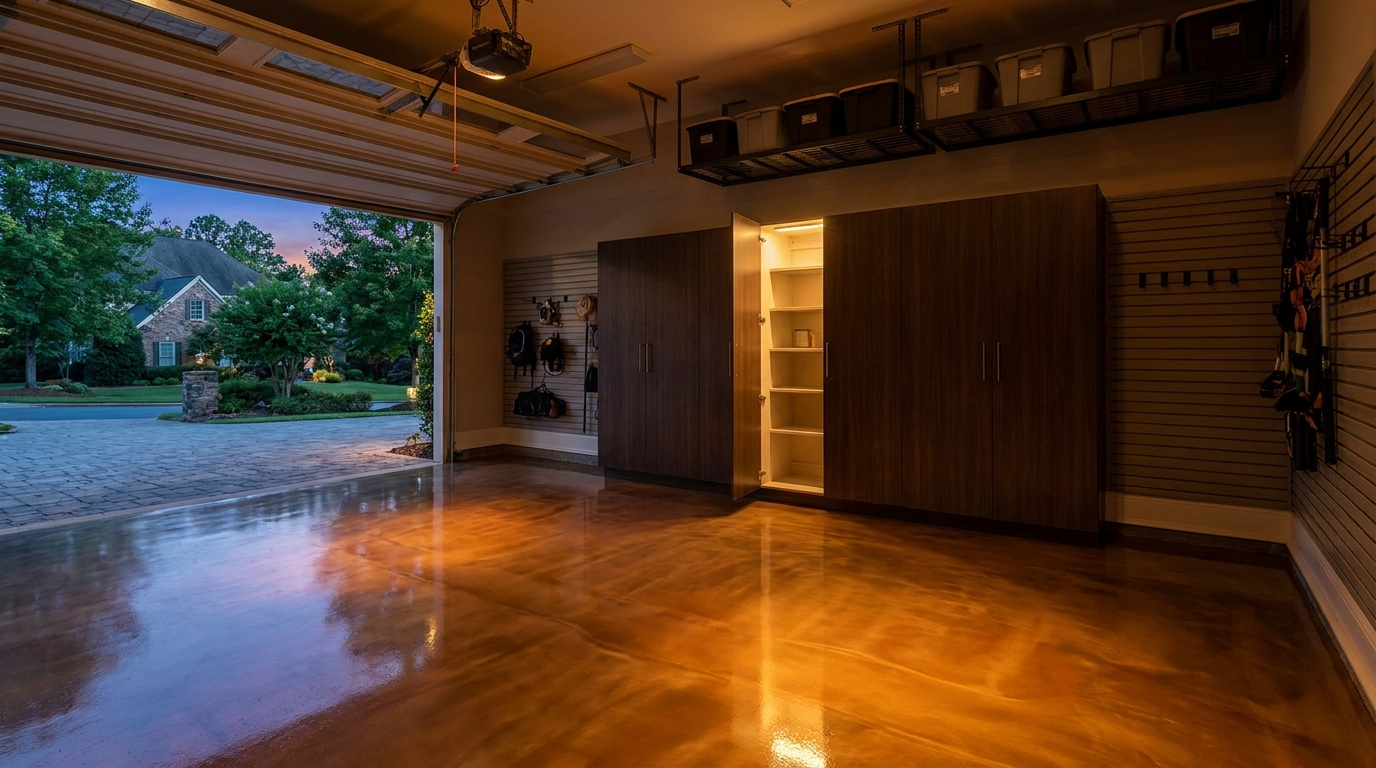
Garage cabinet interior lighting is the light inside the boxes so a door or drawer opens onto a lit interior, the way a kitchen cabinet does. Total Garage Charlotte specifies low-voltage LED with the cabinet plan, not as a strip added later.
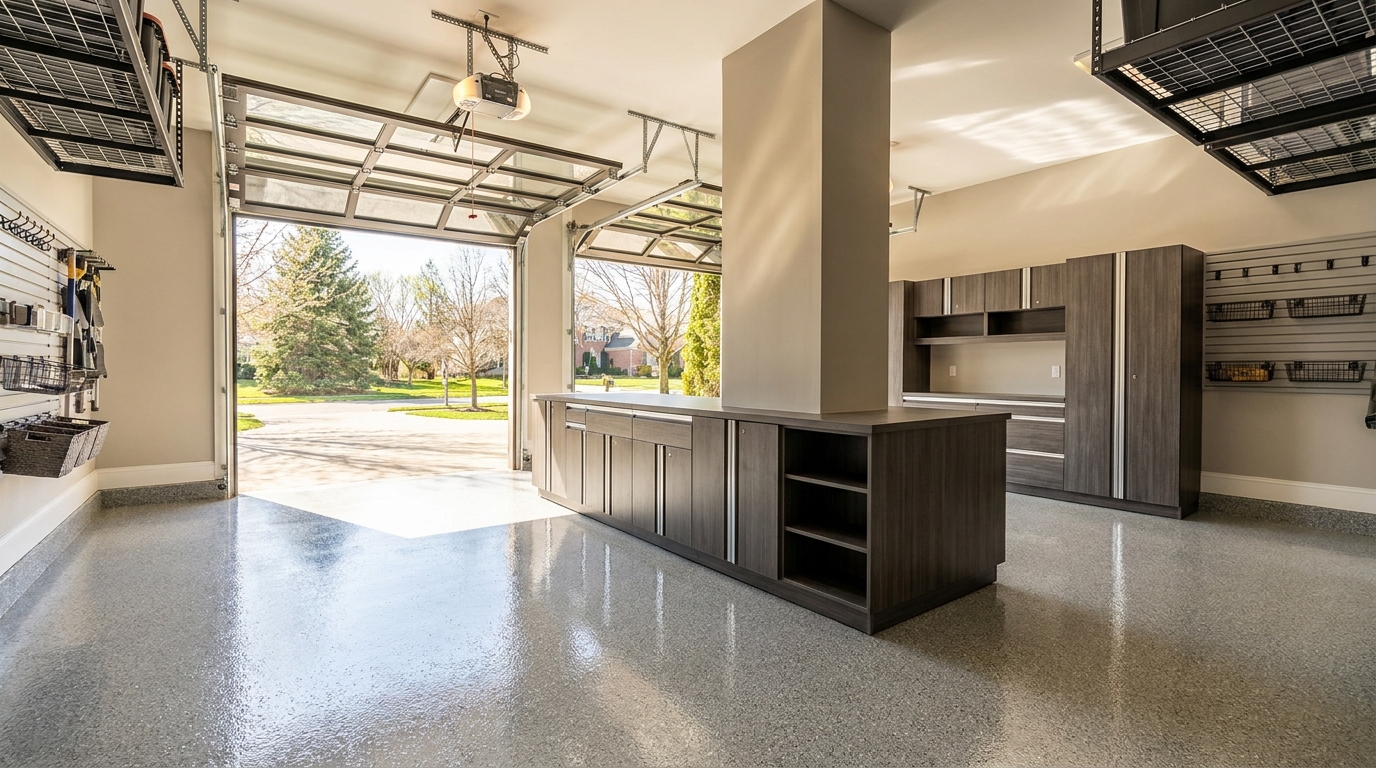
Matching fillers and cabinet boxes wrap or flank a load-bearing garage column so the finished wall reads as one piece of furniture. The post stays in the load path; cabinetry goes around it, not through it.
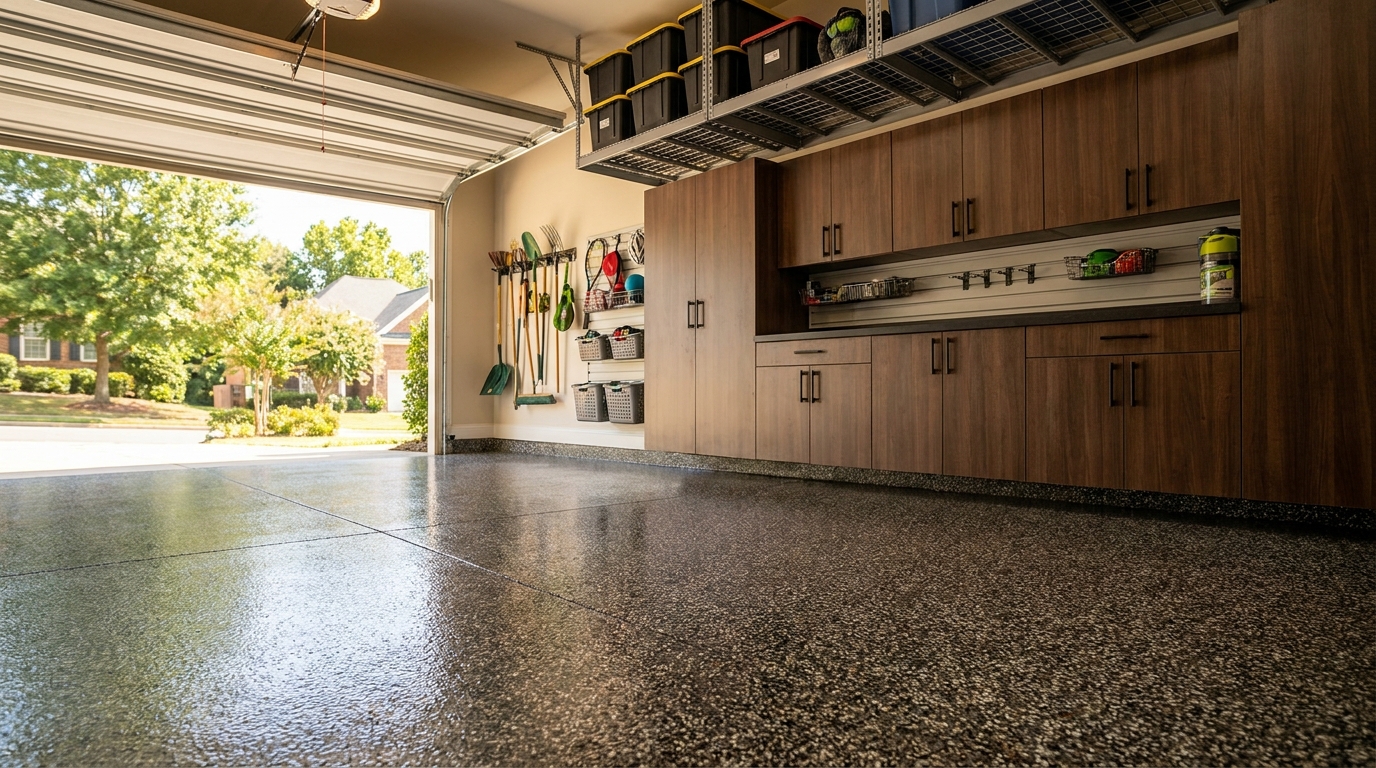
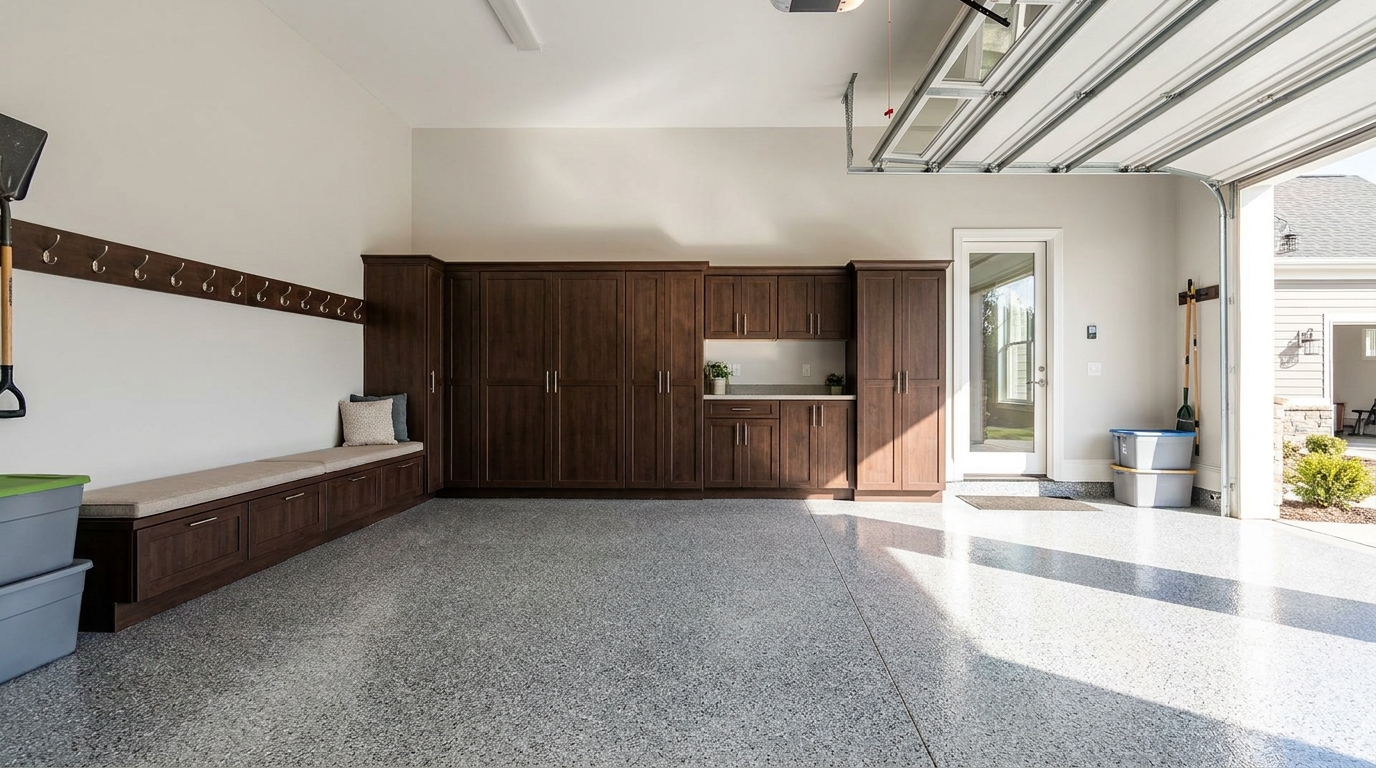
A stone look garage floor is a coated slab whose flake scale and granite-style mix make the floor read as a material, not a printed sheet. We specify that scale with the room: daylight, cabinet faces, and the view from the house.
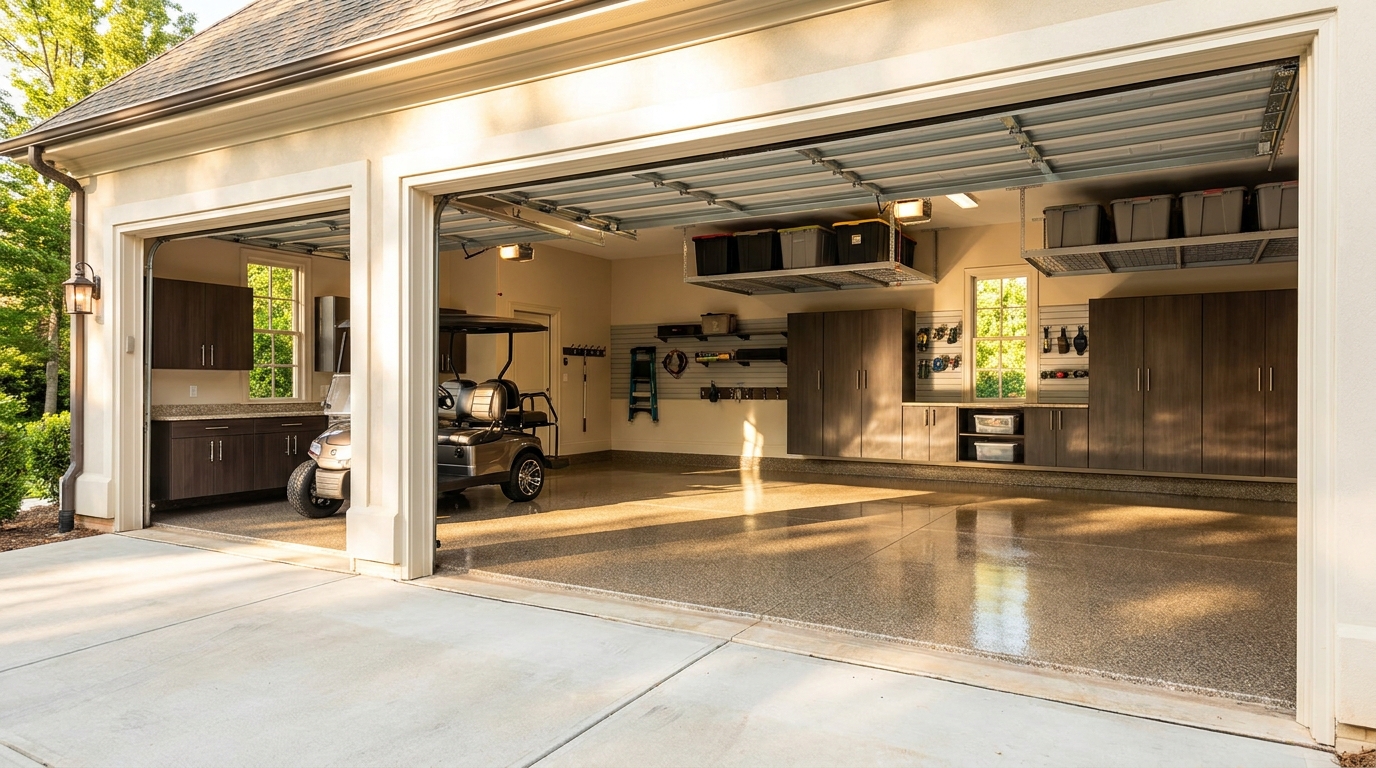
A three-car garage can keep two daily drivers and still have a finished golf-cart stall. Size the third bay to the cart, put cabinets on the cart wall, and spec a receptacle for the OEM charger instead of a 240-volt EV station.
A garage floor threshold is the designed stop at the overhead door, the line where the coated slab meets the driveway and the door weather seal. It is a finished edge, not a ragged coating line that trails off into the apron.
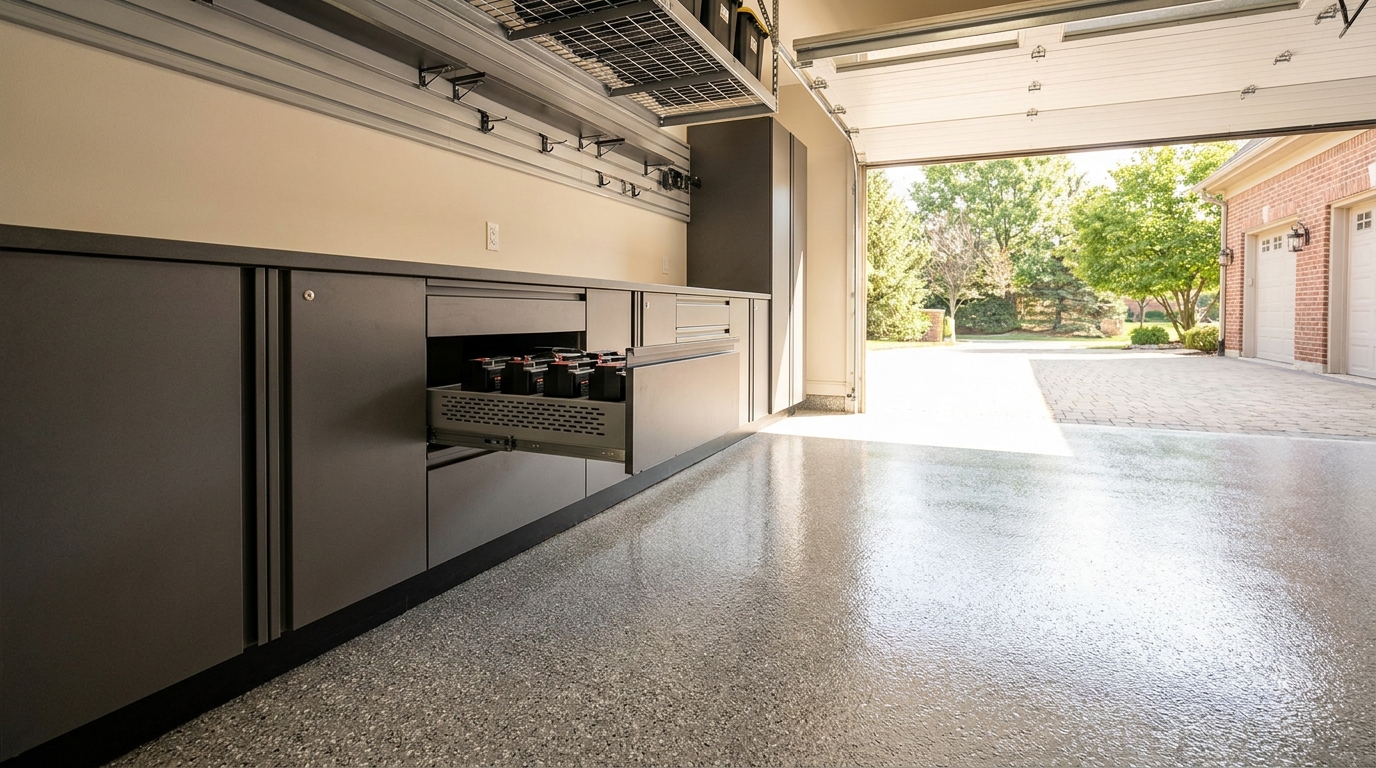
A garage battery charging drawer is a ventilated, outlet-fed drawer, or a dedicated charging cubby, built into the cabinet run so 18V, 20V, and 40V tool packs and their chargers live behind a finished face. The workbench stays a work surface.
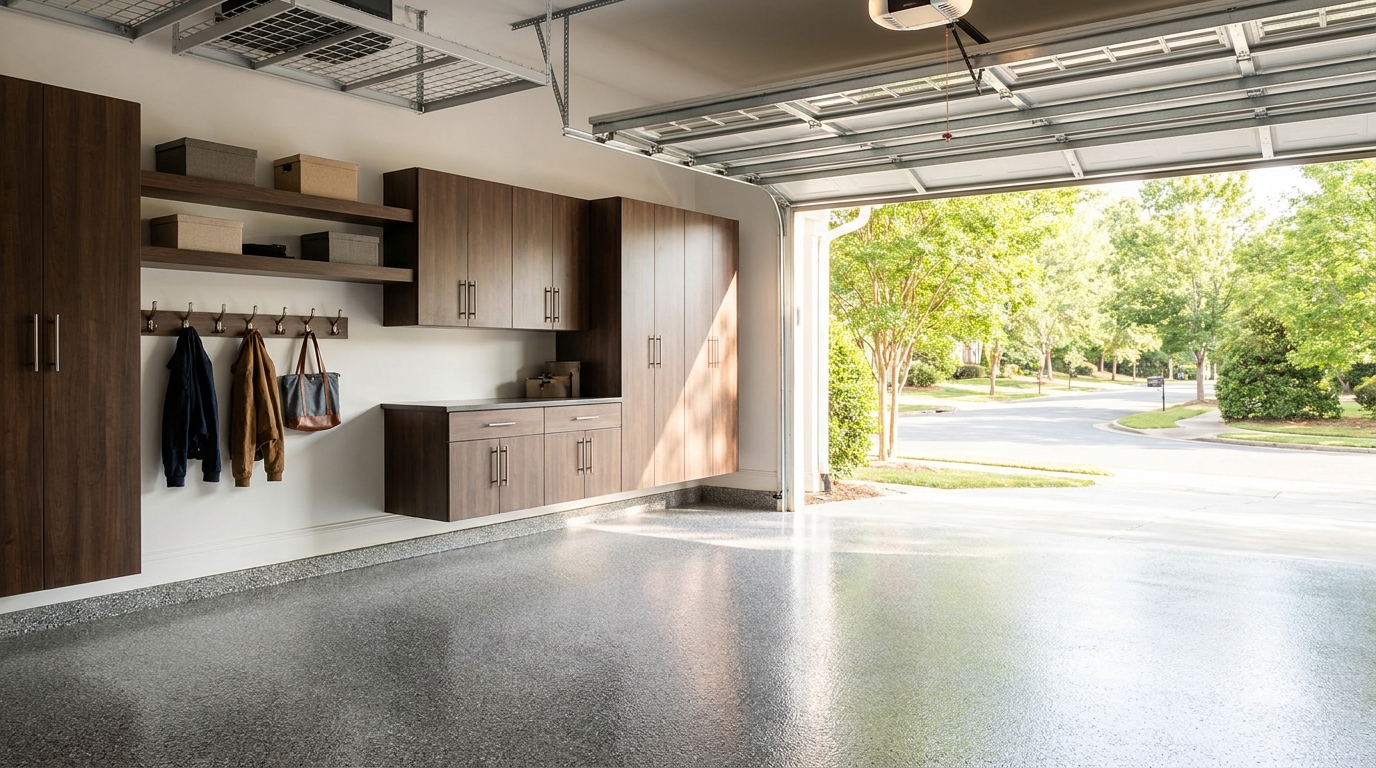
Garage open shelving and cabinets on the same wall share a top line, depth, and finish: lockable closed cabinets hide chemicals and bulk, and an open shelf-and-hook band holds the bags and tools you reach every day.
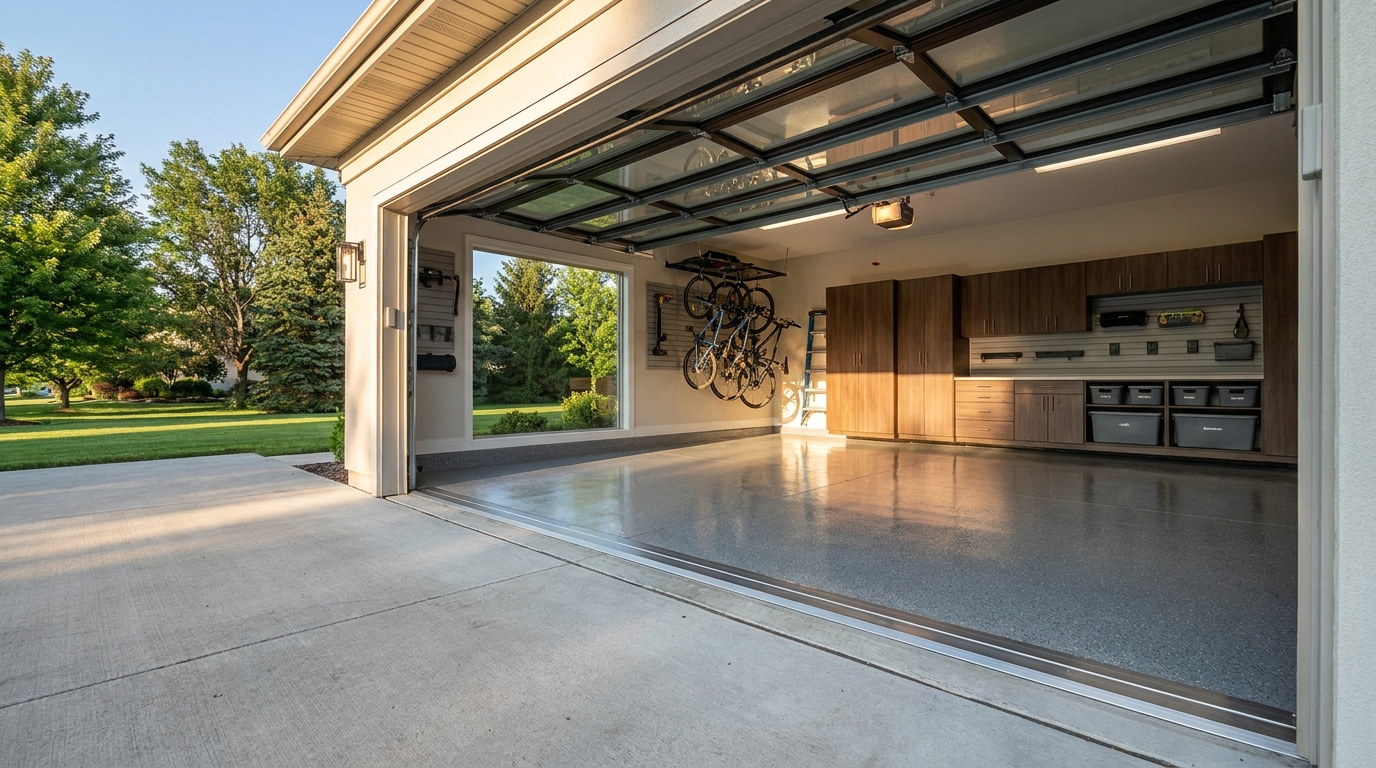
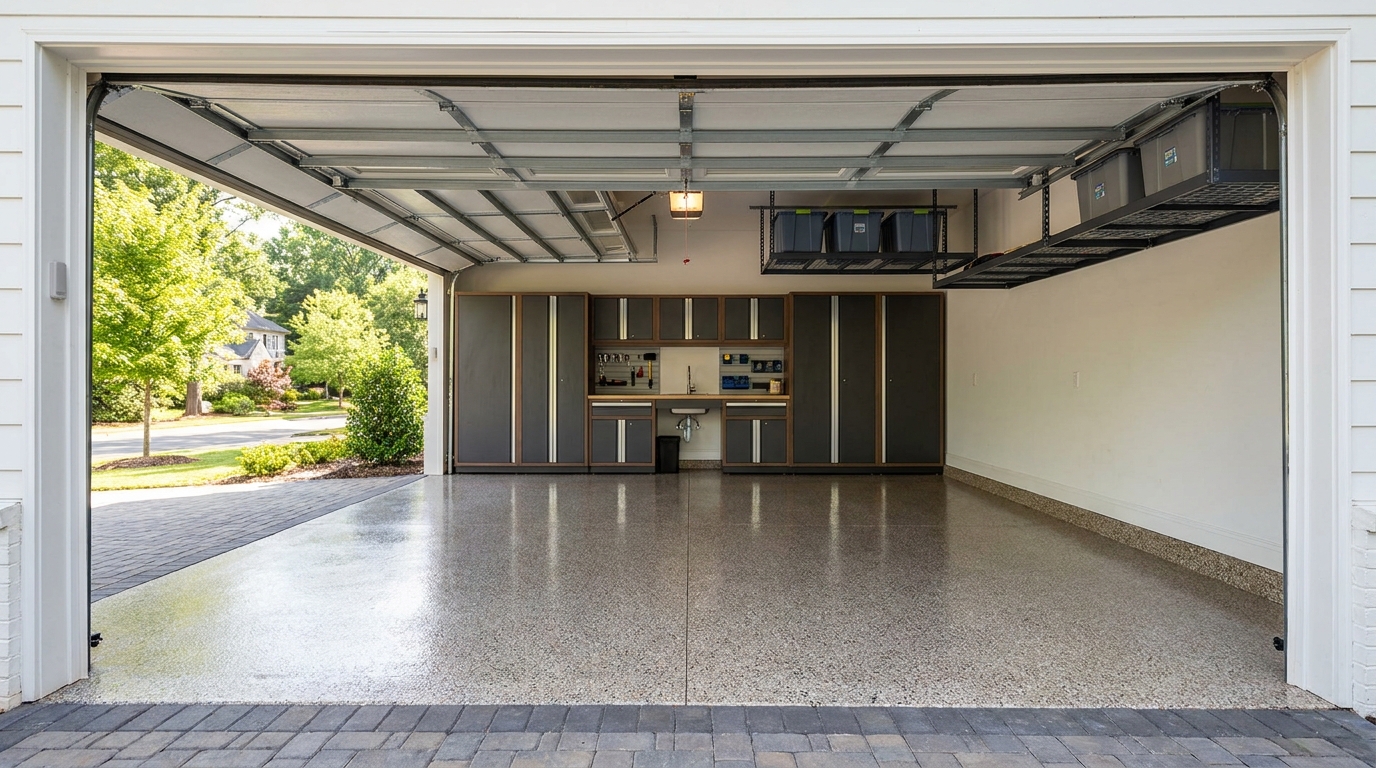
Garage back wall design is the far wall you see from the driveway when the door is up. Closed cabinet wings, a coated floor, and a calm center make that elevation read as millwork, not a shop.