Garage Slatwall That Actually Gets Used: Hooks, Bins, and Walls You Can Reconfigure
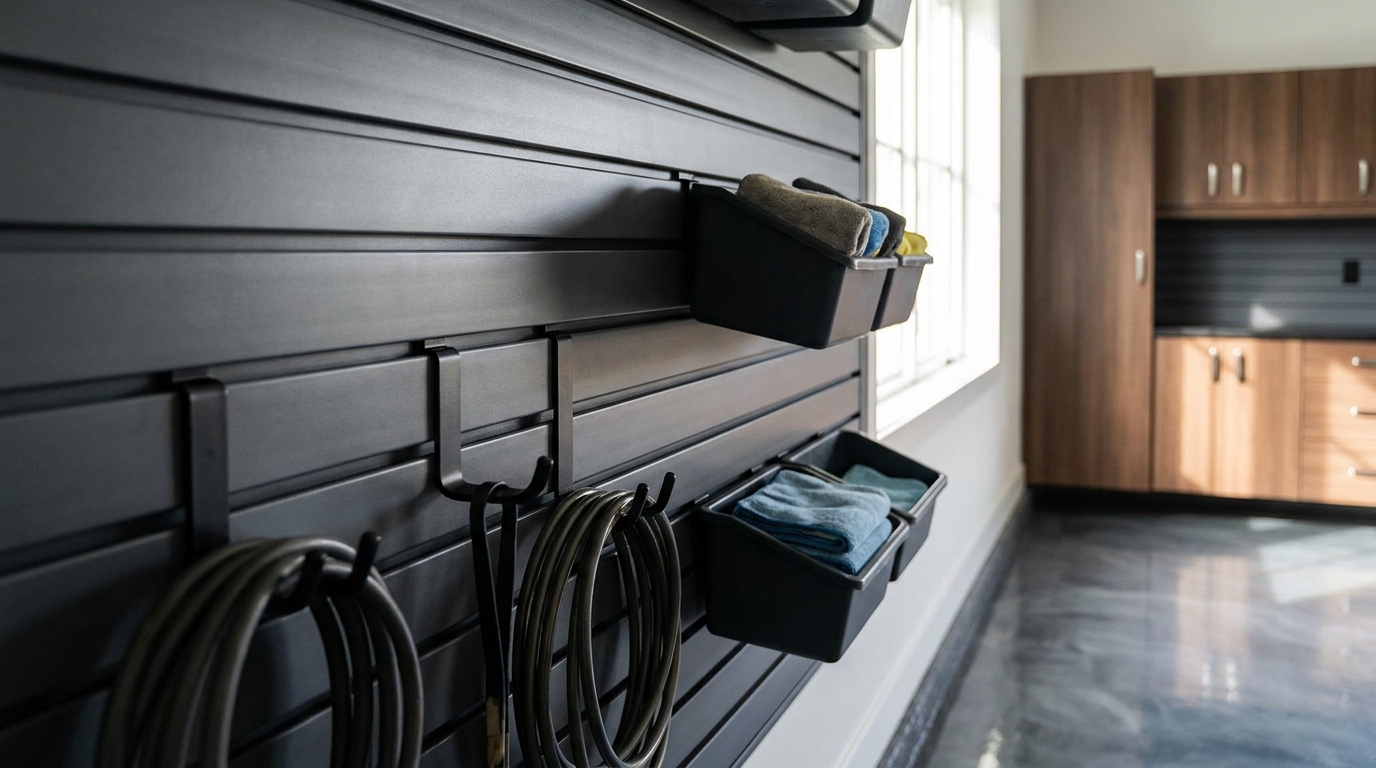
Garage slatwall earns its keep when it works like a shop wall, not a display. Daily tools belong on hooks you can see and grab. Small parts, balls, and mixed seasonal bits belong in bins. Bikes and long-handled gear get their own zone so the floor stays a walking path, which matters because home fall guidance treats clutter you can trip over as a real hazard.[1] A reconfigurable slat panel beats a one-time pegboard because you can move hooks, shelves, and baskets as your stuff changes, without drilling a new hole for every new tool.
A working wall is a floor-clearing system
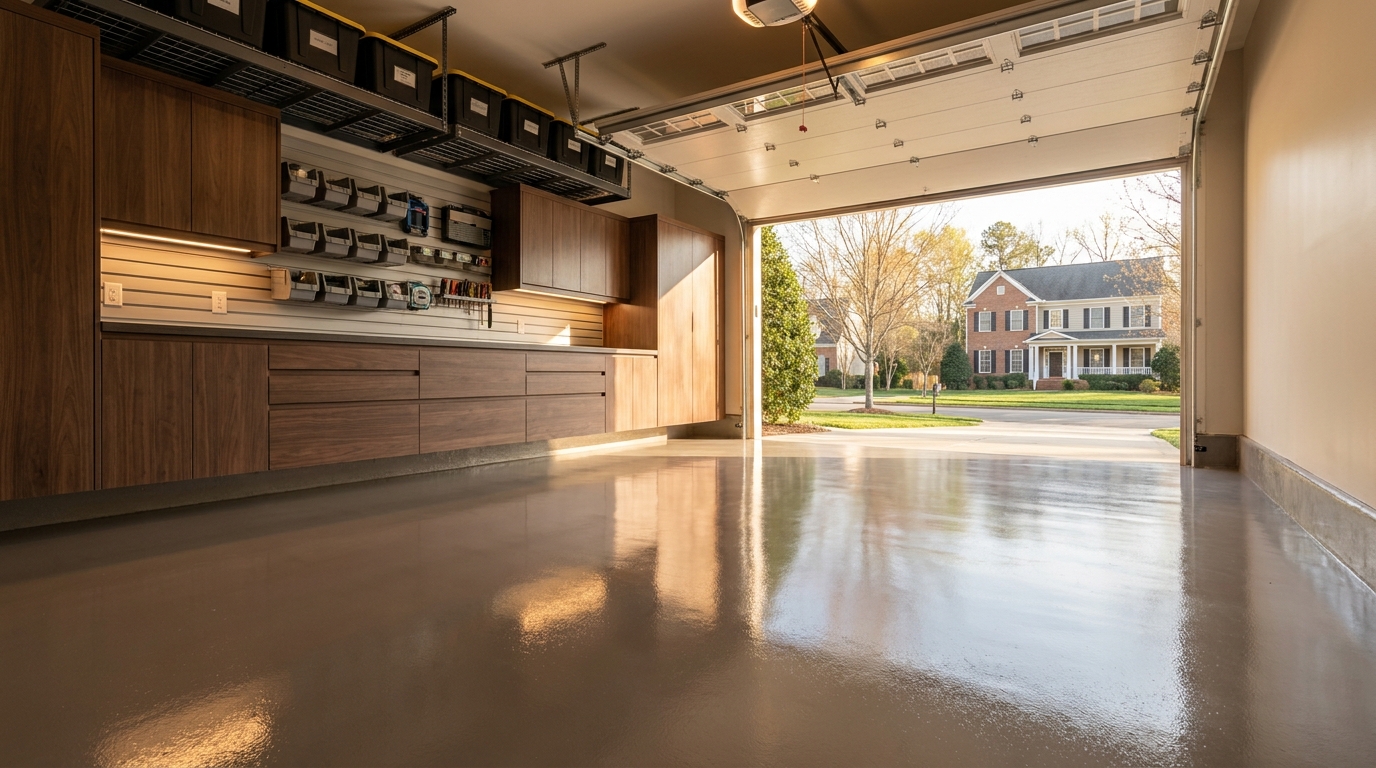
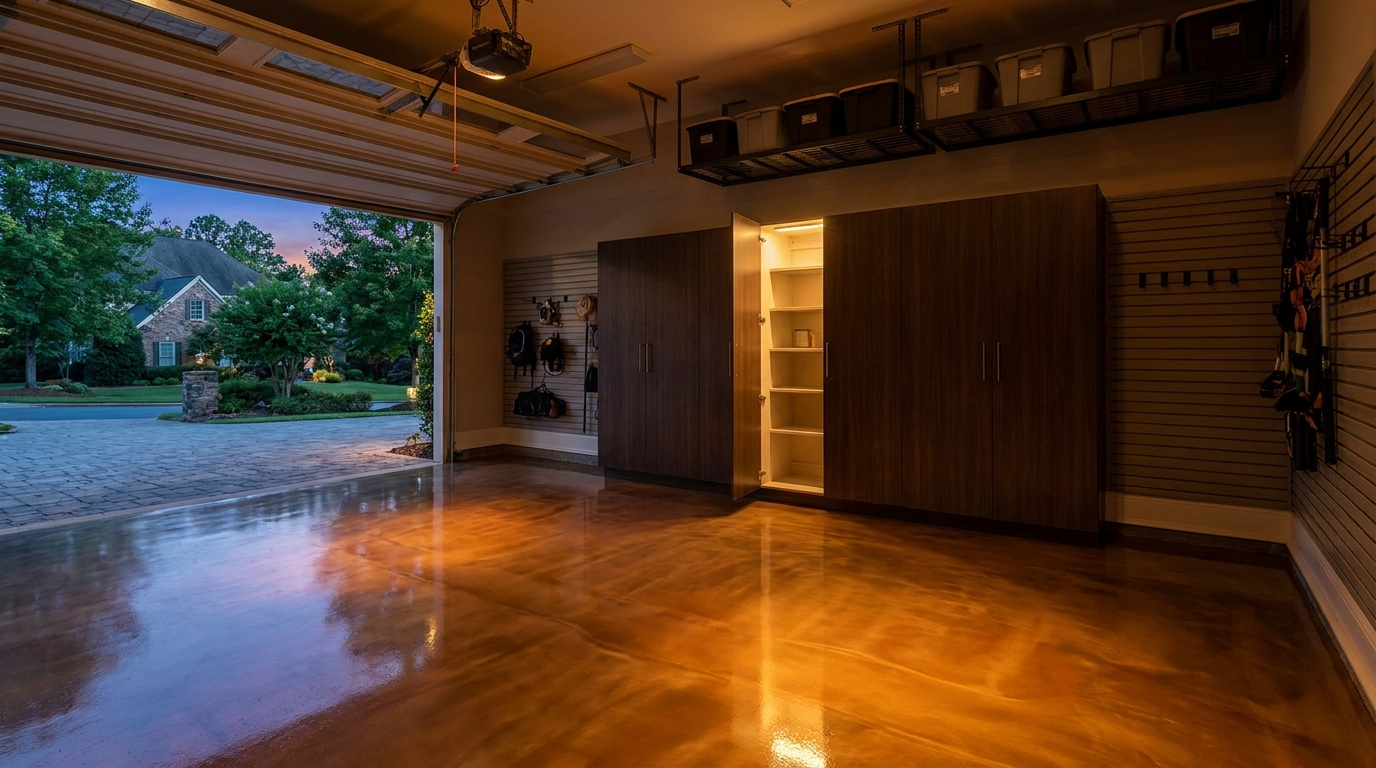
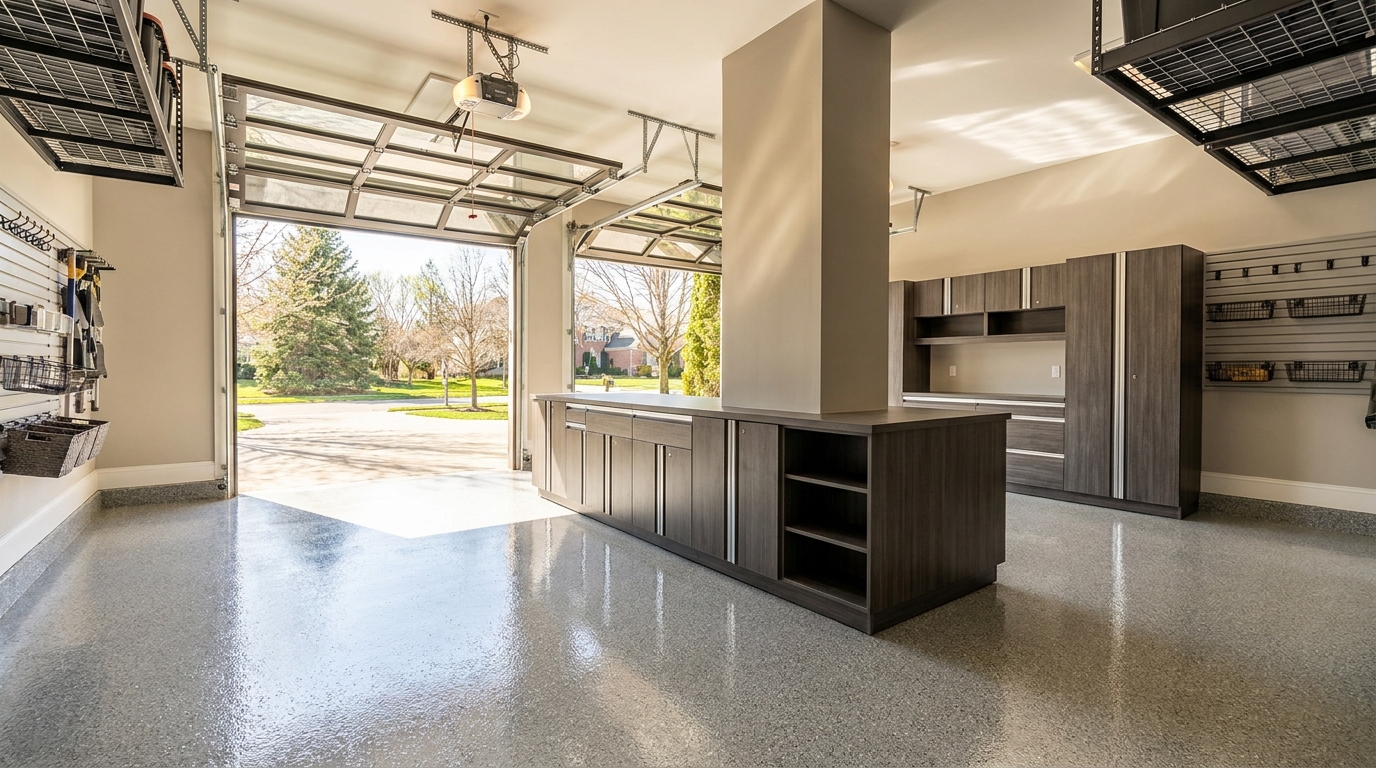
Most Charlotte garages lose the floor first. Two cars, trash bins, a stroller, a couple of bikes, and a pile of yard tools leave a narrow lane that nobody wants to walk through in the dark. Garage slatwall is the wall version of that problem: horizontal channels that accept hooks, baskets, shelves, and specialty holders so the same square footage carries gear in layers instead of in a heap.
The point is not to fill every slat. The point is to get the items you trip over, kick, or walk around off the concrete. CDC fall-prevention guidance lists throw rugs and clutter that can be tripped over among the home hazards that raise fall risk.[1] That advice is written for living spaces, and it applies just as well to the garage you walk through with grocery bags or a sleeping child. Falls are not rare in older households. CDC data updated in 2026 reports that more than 14 million older adults, or about one in four people ages 65 and older, say they fall each year.[2]
Workplaces treat the same idea as a rule. OSHA's walking-working surfaces standard requires passageways and work floors to be kept in a clean, orderly condition and kept free of hazards such as sharp or protruding objects.[4] Your garage is not a jobsite, and that rule does not govern your house. It is still a useful test: if you would not leave a shovel across an aisle at work, it should not live across the path to your driver's door. When the next season's gear arrives, you move a hook. You do not start a new pile on the floor "for now."
Hooks versus bins: what belongs where
Hooks and bins fail when they are treated as interchangeable. They are not. A hook is for something with a handle, a loop, a wheel, or a frame you can hang in one motion. A bin is for things that rattle, roll, or come in a mixed handful.
Put on hooks:
- Long-handled yard tools (rakes, shovels, brooms, edgers)
- Bikes, scooters, and helmets with a strap
- Hoses, extension cords, and air hoses on a dedicated holder
- Ladders and step stools that currently lean against a wall
- Daily hand tools you reach for without thinking (hammer, tape measure, drill)
- Sports bags and backpacks you grab on the way out
University extension horticulture advice has said this for years. A 2021 University of Illinois Extension guide on garden-tool care tells homeowners to store tools off the ground and away from moisture, and it points to hanging racks or tool holders for long-handled tools so edges stay protected and more than one tool can share a small stretch of wall.[5] Colorado State University Extension's November garden guidance is more direct: hang long-handled tools off the floor if you can, to keep humidity off the metal.[6] If the item has a handle, hanging it is kinder to the tool and kinder to your feet.
Put in bins or baskets:
- Fasteners, bits, gloves, rags, and chalk
- Balls, pads, and small sports pieces that will not stay on a single hook
- Charging cables, bike lights, and lock sets
- Seasonal extras (holiday hangers, extra hose nozzles, spare batteries)
- Anything you currently keep in a cracked bucket on the floor
Bins earn their place when they stop a handful of small parts from migrating to the floor. Wire baskets work for gear you want to see. Closed bins work for dusty or oily bits.
Put on a slat-mounted shelf, not a hook: labeled boxes of parts, paint kept away from appliances, and items too awkward to hang but too useful to bury in a cabinet.
Leave off the wall entirely: gasoline, propane, oil, and other flammable liquids. The U.S. Fire Administration tells households to store oil, gasoline, paints, propane, and varnishes in a shed away from the home, and to keep items that can burn on shelves away from appliances.[3] EPA consumer guidance on pesticides is just as specific: keep those products in a locked cabinet in a well-ventilated utility area or garden shed when you can, never near food or medical supplies, and keep flammable liquids outside the living area and far from ignition sources such as a furnace, car, grill, or lawn mower.[8] Slatwall is a working wall for tools and gear. It is not a chemical rack.
Zone daily tools and bikes so the floor stays clear
A slatwall that "looks organized" on install day and is a mess by October usually failed at zoning. The accessories were hung where they looked even, not where your hands actually go. We plan walls the way a shop would, around the stuff you already own.
1. Daily-reach zone (about hip to eye level). This is for the tools and bags you touch several times a week. If you have to move a bike to reach the tape measure, the tape measure is in the wrong place. Lean workplace practice calls this "set in order": create a place for each item and keep it there until it is needed, so people stop wasting time hunting.[7] The drill, the shop vac hose, and the dog leash should live where a tired person can grab them without a step stool.
2. Bike and wheeled-gear zone. Bikes are the item that most often steal the floor. They need a locking hook, not a light utility hook that can lift out if a car door bumps a pedal. On the slatwall we install, locking hooks are the right choice for bikes, ladders, and other impact-prone gear, while standard hooks can slide along the slats when you reshuffle lighter tools. Give each bike a vertical slot that does not swing into a car door or the walkway. Helmets, pumps, and lights sit in a basket next to the bike, not across the bay.
3. Yard-tool zone. Group long handles as one column, not a row of teeth sticking into the aisle. Hang them high enough that the heads clear the floor and any baseboard dampness. That matches the extension advice to keep metal off the slab, where humidity collects.[5][6]
4. Sports and kid-gear zone. Balls go in a deep basket. Bats, sticks, and boards go on hooks. This is the zone that changes most from season to season, which is why a slat channel beats a fixed pegboard grid. When soccer ends and the bikes come back out, you move two hooks and a basket. You do not patch drywall.
5. Keep a clear band at the floor. Leave the bottom slats mostly empty, or use them only for items that sit tight to the wall. Protruding objects in a walking path are the kind of hazard OSHA wants off workplace floors.[4] In a home garage, that band is also where car doors swing.
If you do nothing else, walk from the house door to the driver's door and from the overhead door to the workbench. Anything in those two paths that is not a car or a trash bin should be able to live on the wall.
Why a reconfigurable panel beats a one-time pegboard
Pegboard is not a failure. Illinois Extension still recommends a pegboard system for short-handled tools, and even suggests outlining each tool so a missing piece is obvious.[5] That visual cue is the same idea lean teams use when they say a clean, standardized layout makes it easy to see when something is out of place.[7]
Pegboard starts to fail when a household asks one wall to hold more than a tidy set of hand tools. The hole grid decides where a hook can sit, not the shape of the item. Heavy hooks can tear out. Rearranging means pulling pegs and hunting for the next open hole. A family garage is not a static toolbox. It holds bikes in April, coolers in July, and leaf blowers in November.
A slatwall panel is built for that change. Accessories ride in a continuous channel, so a hook can sit wherever the item needs it. On the systems we install, hooks and shelves can be moved without tools, and we use a mix of locking hooks for heavy or impact-prone items and sliding hooks for everyday tools. You are not adding a new screw every time you buy a different rake, and you are not leaving a constellation of empty holes when a kid's bike is replaced by a cargo rack.
People also put things back when putting them back is obvious. Lean 5S language calls the first two steps Sort and Set in Order. Sort decides what belongs in the garage at all. Set in Order gives each remaining item a home aligned with how you actually use it.[7] A slatwall with labeled bins and a visible hook for each daily tool is that system in hardware.
Moisture, rust, and why the slab is a bad shelf
Charlotte garages sit on concrete and they breathe outdoor air every time the door opens. That is hard on steel. Illinois Extension's 2021 tool-care guidance starts with storage, not sharpening: do not leave tools outside to pick up moisture from grass and dew, and store them off the ground, away from potential moisture, in a shed, barn, or garage.[5] CSU Extension's seasonal advice adds the height detail. Hanging long handles keeps humidity off the metal.[6]
Slatwall helps before you even pick a hook. Gear that used to sit on the slab now hangs in air. The slatwall we install is extruded PVC, which does not absorb water the way painted particle board can. That does not replace a dry, cleaned tool. Extension educators still want you to wipe sap and soil off blades and oil metal before you store it.[5] The wall just stops the concrete from undoing that work overnight.
Fire, chargers, and what the wall should never hold
A clear floor is also a safer floor when something goes wrong. The U.S. Fire Administration notes that garage fires tend to spread farther and cause more injuries and dollar loss than fires that start in other parts of the home, based on National Fire Incident Reporting System data.[3] Their garage checklist is short: keep burnable items on shelves away from appliances, plug only one charging appliance into an outlet, and do not use an extension cord while charging.[3]
Chargers for bikes and tools belong on a clear stretch of wall or a dedicated shelf, not buried under cardboard. Combustible boxes belong on a shelf that is not next to a water heater or a furnace. Flammable liquids belong outside the living area, away from the car and the grill.[3][8] If we are measuring your wall, we plan around outlets and switches so they stay fully accessible. A hidden outlet is an invitation to run a cord across the floor, which puts the trip hazard right back where you started.[1][4]
A layout people actually keep using
The installs that still look good a year later share a few habits. Start with an inventory on the floor, once. Pull weekly-use items into one pile, seasonal items into another, and the "why is this here" items into a third. That is the Sort step.[7] Donate or relocate the third pile before you buy a single hook.
Hang the weekly pile first, in the daily-reach zone, even if the wall looks uneven. Give bikes and long tools their own columns, then fill leftover slats with bins. Empty slats are not wasted. They are the space you will need in three months. Label the bins. The outline-on-pegboard trick from Illinois Extension works here too: if a hook is empty, you should be able to name what belongs there.[5]
Revisit the wall when the season changes, not when the floor is already a wreck. Moving a hook takes seconds. Rebuilding a pile takes a Saturday. If you want help turning that plan into a measured wall, that is the work we do. We start with the gear you actually own, not a catalog page of accessories you will never hang.
Practical takeaways
- Treat slatwall as a working wall: hooks for handled and hanging items, bins for mixed small stuff, shelves for boxes, nothing flammable near appliances or chargers.[3][8]
- Clear the two walking paths first (house door to car, overhead door to workbench). Home fall guidance calls out clutter you can trip over for a reason.[1]
- Zone by how often you grab an item, not by how even the hooks look. Daily tools sit at standing reach. Bikes and yard tools get their own columns.
- Hang long-handled tools off the slab so moisture is less likely to sit on the metal, a point university extension tool-care guides have made for years.[5][6]
- Prefer a reconfigurable slat panel over a one-time pegboard when the wall has to hold bikes, bins, shelves, and tools that change with the season.
- Leave empty slats on purpose. A wall with room to move is a wall you will keep using.
- Locking hooks belong on bikes, ladders, and anything a car door might bump. Sliding hooks belong on everyday tools you expect to rearrange.
- Pesticides, gasoline, propane, and similar products belong in a locked cabinet or a shed, not on a display hook.[3][8]
How we can help
Our team designs garage slatwall around the tools, bikes, and daily gear you already trip over, then hangs the first round of hooks, bins, and shelves so the floor is clear when we leave. We measure around outlets and studs, match the wall to the rest of the garage, and show you how to move accessories when the season changes. Have more questions or want to get in touch? Visit our contact page to book a free in-home consultation.
Citations
- CDC, National Center for Injury Prevention and Control, "Facts About Falls" (2026-01-27)
- CDC, National Center for Injury Prevention and Control, "Older Adult Falls Data" (2026-02-26)
- U.S. Fire Administration, "Basement and Garage Fire Safety" (page current as of 2026)
- Occupational Safety and Health Administration, "1910.22 - General requirements" (29 CFR 1910.22)
- University of Illinois Extension, "Proper maintenance extends lifespan, saves money on garden tools" (2021-09-27)
- Colorado State University Extension, Pueblo County, "November in the Garden" (2023-11)
- Lean Construction Institute, "5S in Lean - Sort, Straighten, Shine, Standardize, Sustain" (page current as of 2026)
- U.S. Environmental Protection Agency, "Storing Pesticides Safely" (2025-10-09)