Garage Locker Cabinets Sized So Both Cars Park
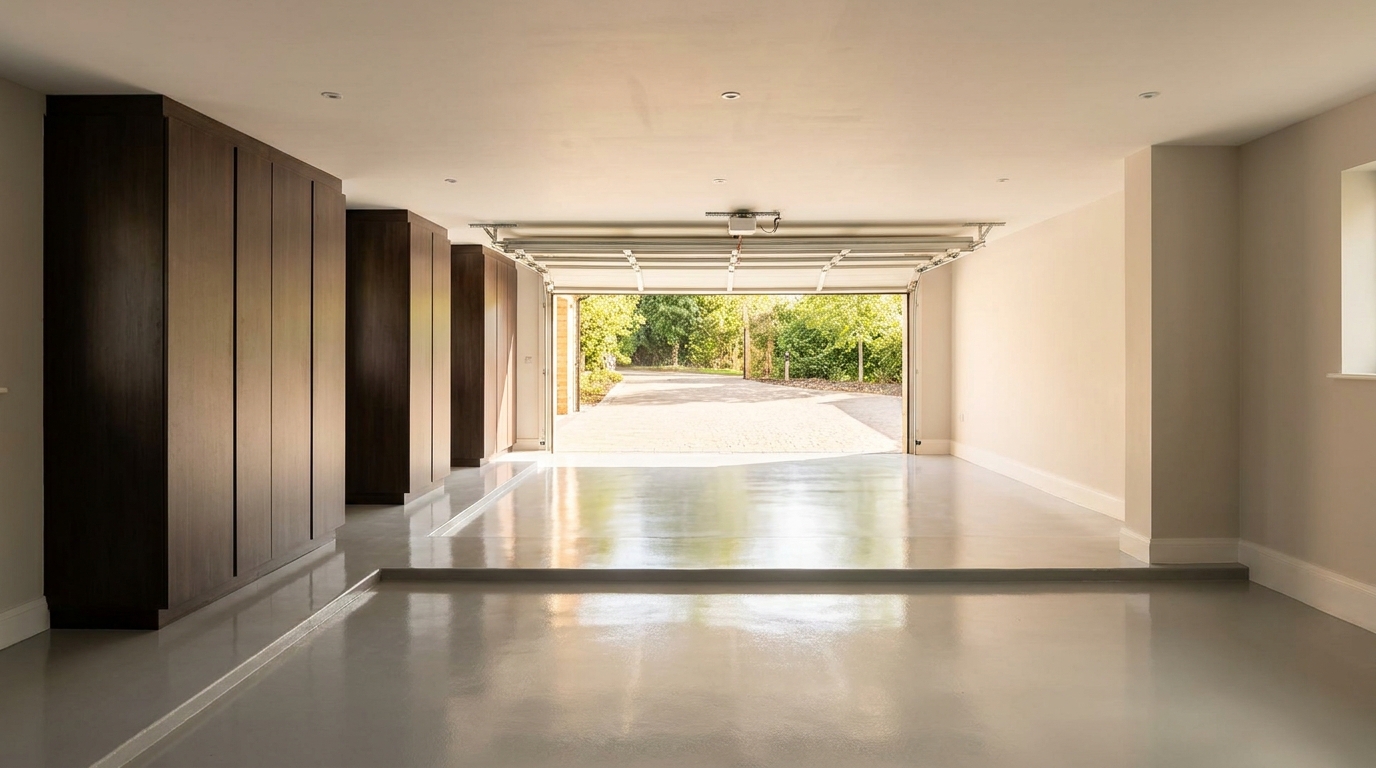
In a finished family garage in Charlotte, Waxhaw, or Monroe, the morning already has a place to land. Each person has a locker column on the long wall. Backpacks hang, shoes sit on a shelf, ball bags and lunchboxes have a labeled cubby, and both cars still park with room to open a door. That is the job of garage locker cabinets: a designed hang-and-go wall for daily gear that stays on the wall instead of claiming a parking stall. The vehicles parked there are larger than they used to be. In model year 2024, about 66 percent of new U.S. light-duty vehicles were trucks under federal rules, and truck SUVs alone accounted for half of new-vehicle production.[1]
A locker column is a person-sized wall, not a mudroom and not a deep cabinet run
Families in Mecklenburg and Union counties often come into the house through the garage. That door is the real front door on school mornings and after practice. The right answer is not a hall tree inside the kitchen, and it is not a row of full-depth base cabinets that push a bumper into the neighboring stall. It is a vertical column for each person, mounted along a garage wall we have measured so the parking bays remain parking bays.
Each column is a short, tall stack: a hanging zone for bags, a mid-height shelf or cubby for the things that come in with the bag, and a low shelf or open bay for shoes. Doors can close over the daily clutter if you want a quiet wall when guests walk through. The point is ownership. Mom’s work bag does not share a hook with a soccer backpack. A kindergartner can reach a labeled cubby without climbing. A teenager can hang a heavy pack at adult height. When everyone has a column, the floor in front of the house door stays a walking lane.
That is different from an interior drop zone. An entryway locker is about coats and mail. A garage locker column is about the gear that should never come inside: wet cleats, gym bags, helmets, school backpacks, and the pair of shoes that collected Union County clay on the way home. It is also different from a generic cabinet roundup. A workbench run and a chemical cabinet have other jobs. The locker wall is the hang-and-go layer, sized as furniture for people who park two cars.
Size the wall first, then the lockers, so both cars still park
The constraint is the stall, not the storage catalog. Over the past 30 years, the Insurance Institute for Highway Safety reported in 2023 that the average U.S. passenger vehicle had grown about 4 inches wider and 10 inches longer (and about 8 inches taller and 1,000 pounds heavier).[2] EPA’s automotive trends work shows the same direction in a different measure: vehicle “footprint,” the area enclosed by the four tires, has generally increased since the agency began tracking it in 2008, as the mix has shifted toward SUVs.[1] A locker wall that would have been easy beside two sedans can pinch two crossovers.
Our team starts with the vehicles you actually park. We measure wall to wall, door swing, mirror clearance, and the walking gap you want between the cars and the locker faces. Then we draw locker columns that fit that remaining strip. Wall-mounted cabinets (with optional legs) keep the floor visible for sweeping and keep moisture from sitting under a toe-kick. Projection is the number that matters. A column that is only as deep as a hanging backpack uses far less stall width than a full-depth base cabinet meant for bulk storage. If a family also wants deep cabinets for tools or bulk paper goods, those belong on a different wall, or at the rear of the bay, not in the hang-and-go lane.
We also plan for doors. A locker door that swings into a parking stall is a daily annoyance. We specify door swing, or sliding or lift-up fronts where they help, so a person can load a backpack while a car is already in. The finished picture is two vehicles parked as a two-car garage, plus a family wall that reads as part of the room, not as leftover furniture shoved against a bumper.
Give each person a hang-and-go column they can actually use
A locker column works when a tired kid can put things away without a lecture. That means hooks at the right height, a shelf they can see into, and a shoe bay that is not a junk drawer. CDC’s home fall-prevention work lists clutter that can be tripped over as a household hazard, and the agency’s STEADI “Check for Safety” checklist, a 2017 brochure CDC still distributes, is blunt about floors: pick up shoes, papers, books, and other objects, and keep frequently used items on lower shelves, about waist high.[3][4] University of Nevada, Reno Extension makes the same point in plainer language: keep shoes, boxes, and other objects off the floor, and store cabinet items you use often where they are easy to reach, including in garage and storage areas.[5]
We use that research as a design brief, not as a warning poster. The finished locker wall puts daily gear at hand height so it never becomes floor clutter. Typical column contents in the Charlotte garages we design:
- One or two heavy-duty hooks for a backpack and a sports bag, set to the person’s shoulder height.
- A mid shelf for a helmet, lunchbox, or water bottle, so those items do not sit on the floor beside the car.
- A low open bay or basket for the shoes that come off before the house door.
- A small closed cubby for chargers, sunglasses, or a spare uniform, so small things have a home inside the column instead of on a workbench.
Labels matter more than people expect. A name or a color on each column is how the system survives a busy week. When the soccer bag has a dedicated hook, it stops migrating onto the hood of the car. When shoes have a bay, they stop collecting in the walking lane between the two parking stalls.
Height is a family decision. Younger children need hooks they can reach without a stool. Extension fall-prevention guidance specifically flags standing on chairs to reach cabinet items as a hazard, and CDC’s checklist prefers frequently used items at about waist height.[4][5] We can split a column: low hooks and a shoe bay for a child, a higher hanging rod for a parent, in the same vertical footprint. The cars do not care who owns which shelf. They only care that the column did not grow deeper than the stall can spare.
Keep daily gear out of the chemical cabinet (and chemicals out of the locker)
A hang-and-go wall is for bags and shoes. Lawn chemicals, automotive fluids, and leftover pesticide do not belong in the same cubby as a lunchbox. The U.S. Environmental Protection Agency’s consumer guidance is to store pesticides out of reach of children and pets, in a locked cabinet in a well-ventilated utility area or garden shed when possible, never with food, and to keep flammable liquids outside the living area and away from ignition sources such as a furnace, a car, a grill, or a lawn mower.[6] K-State Research and Extension repeats that locked-cabinet rule for household pesticide storage.[7]
The U.S. Consumer Product Safety Commission reports an estimated 67,000 emergency department-treated injuries in children under 5 in 2023 from poisonings, and notes that nearly seven out of ten poisonings occurred in the home. CPSC’s current advice is to keep chemicals and cleaning supplies in a locked cabinet or box, out of a child’s reach, in original child-resistant containers.[8] The American Academy of Pediatrics, in childproofing guidance last updated in 2021, lists antifreeze, windshield washer fluid, gasoline, kerosene, insecticides, and weed killer among items often found in a basement or garage, and tells families to store products in locked cabinets or containers, out of sight and reach.[9]
That is why a locker wall and a lockable cabinet run are two different pieces of the same garage. Our garage cabinets are specified with lock-and-key options on the units that hold fertilizer, automotive chemicals, paints, and sharp tools. The family locker columns stay open and easy. The chemical storage stays closed and keyed. Gasoline, if you keep any, does not go in a locker at all. A 2021 U.S. Army fire-safety article, written for families, is clear: never store gasoline in the living area of a house, keep it in a secure, well-ventilated location out of the reach of children, and treat a detached garage or shed, away from pilot lights and other ignition sources, as the safer pattern.[10]
The National Fire Protection Association’s August 2025 Home Structure Fires report (covering 2019 through 2023) found that fires starting in garages accounted for 11 percent of home-fire property damage, a share the authors flag as disproportionate compared with how often those fires are noticed while they are still small.[11] Closed, dedicated cabinets for fuels and solvents, kept off the hang-and-go wall and away from the parked cars, are how we treat that room as a finished part of the house without mixing school bags and flammables.
The wall should look like the rest of the finished garage
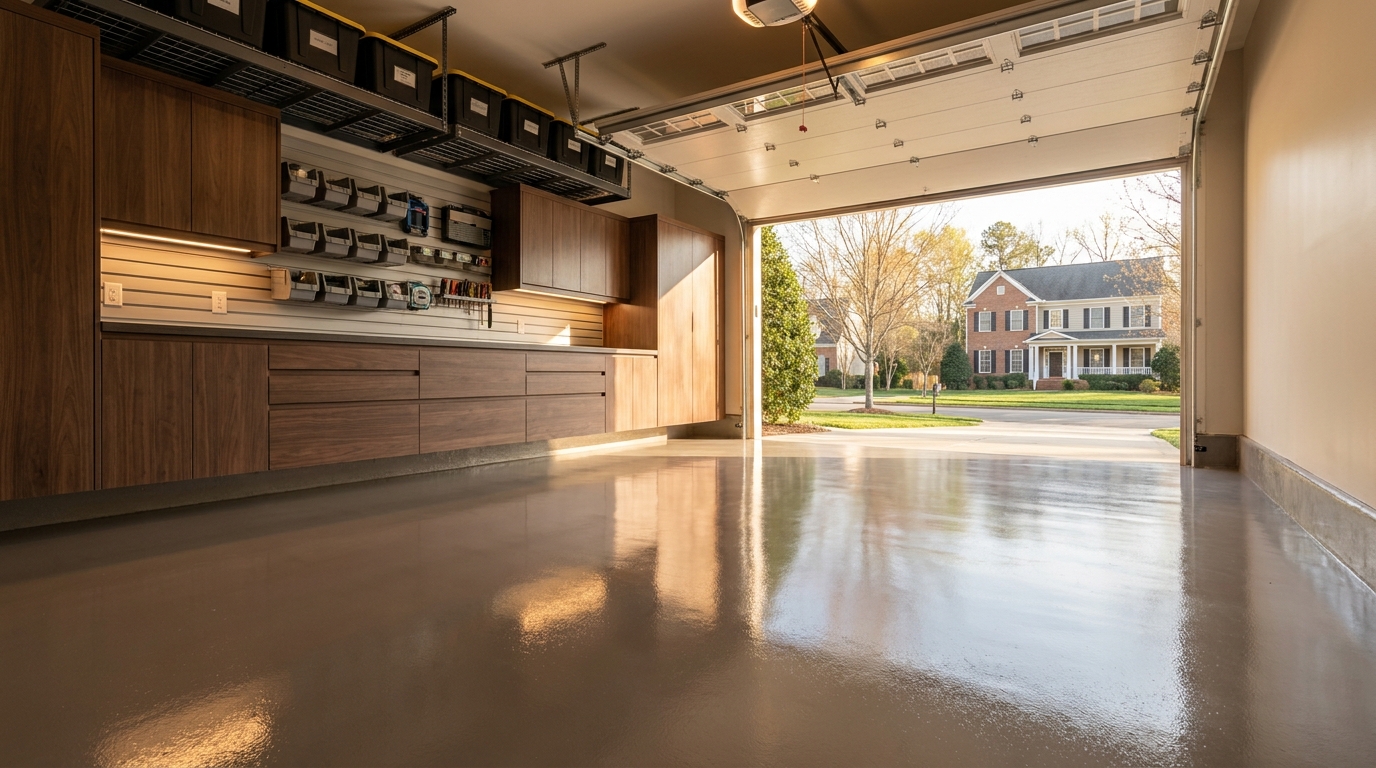
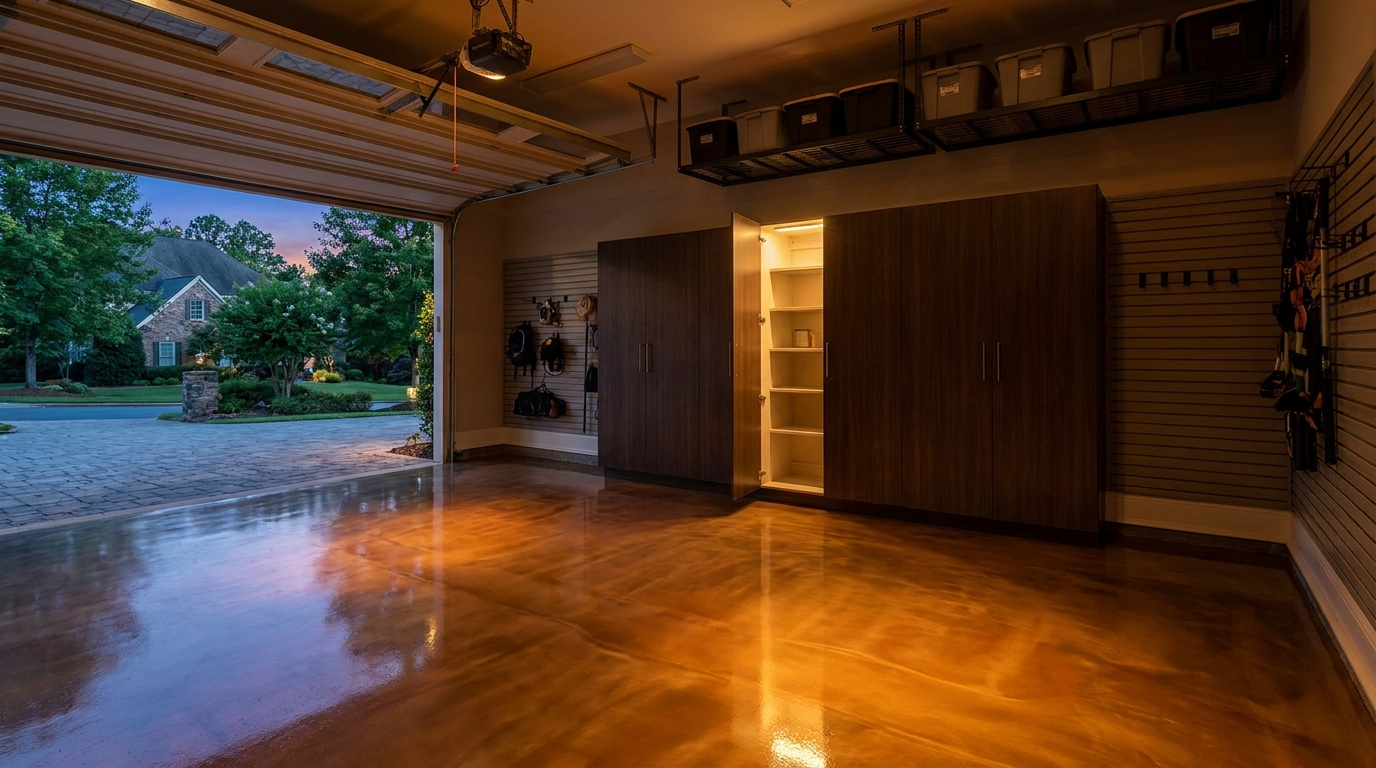
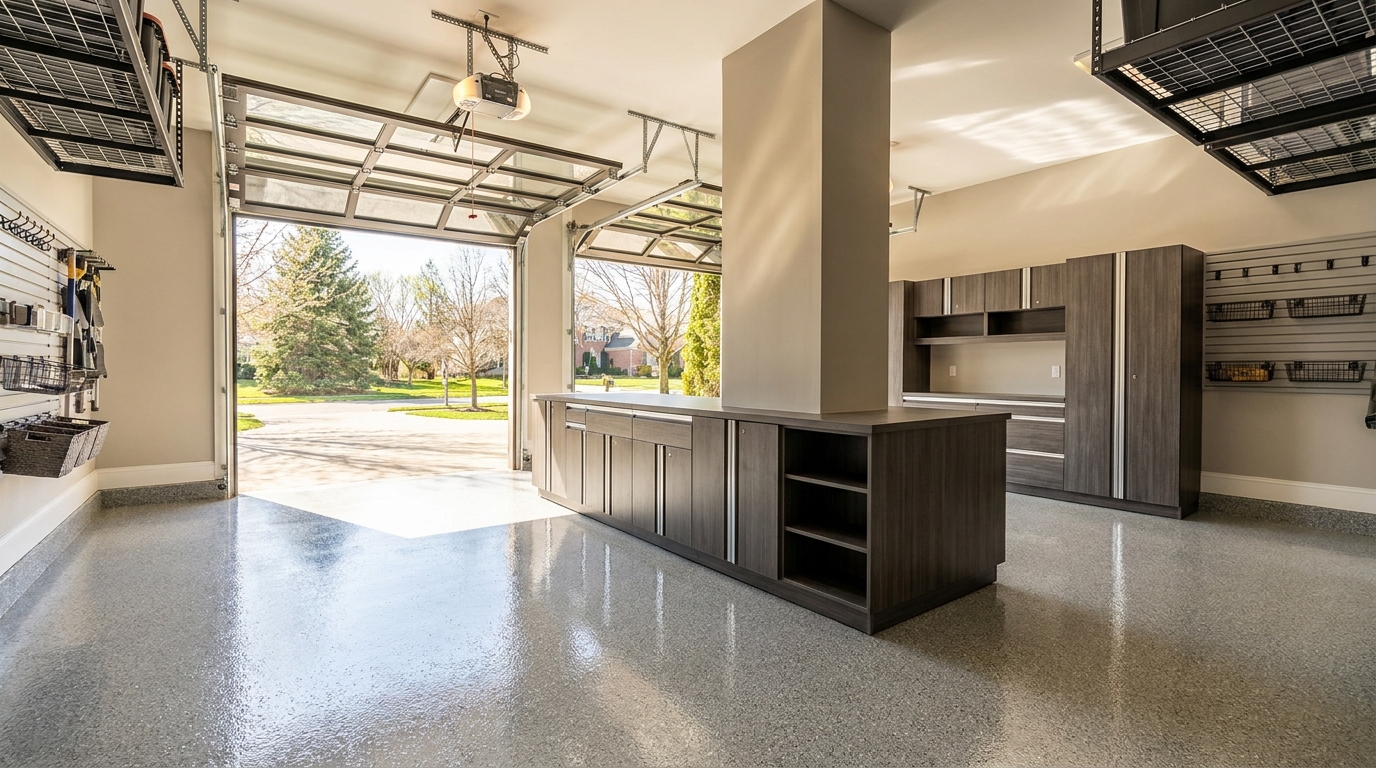
Locker columns only feel like a family feature when they match the rest of the room. We align door style, finish, and hardware with the cabinet run on the adjacent wall so the garage reads as one space. A closed locker face next to open slatwall for sports, or next to a workbench, still belongs to the same design. Lighting along the locker wall matters because people use it in the dark of a winter morning. A clear floor in front of the columns matters because that is where two people stand at once while they hang bags.
Charlotte heat and humidity are part of the spec. Wet shoes and damp backpacks need airflow. We leave shoe bays open, or we use ventilated fronts, instead of sealing moisture into a dead cubby. Seasonal gear (tournament chairs, holiday bins, camping duffels) does not live in a daily locker. Those items go overhead or into closed storage so the column stays for what you grab every day. The parking stalls stay for parking.
When we design this for a two-car garage, we also talk about the house door. The locker wall should sit on the path from the car to that door, not on the opposite wall that nobody walks. If the family enters on the passenger side of the right-hand stall, that is where the columns go. If a third person parks in the driveway, they still get a column. The wall is for people, not for the number of overhead doors.
Practical takeaways
- Plan one locker column per person on the garage wall you actually walk from the car to the house, and keep that wall shallow enough that both cars still park with door-swing room.
- Measure the vehicles you own now. Newer SUVs and trucks take more stall width than the sedans many two-car garages were drawn around.[1][2]
- Put backpacks on hooks, shoes in a low bay, and small daily items on a mid shelf, so the floor in front of the house door stays a walking lane.[4][5]
- Keep pesticides, automotive fluids, and other household chemicals in a separate locked cabinet, never in the same column as lunchboxes or sports gear.[6][8]
- Do not store gasoline in a locker or in the living area. Use an approved container in a secure, well-ventilated spot away from ignition sources.[10]
- Match locker finish and hardware to the rest of the cabinet run so the hang-and-go wall looks like the room, not like a leftover rack.
- Set hook height to the person who uses the column. Children should reach their own bags without climbing.
How we can help
Our team comes to your Charlotte-area garage, measures the stalls and the wall, and draws locker columns that belong to each person without taking a parking space. We can pair that hang-and-go wall with lockable cabinets for chemicals, and with the rest of a coordinated cabinet layout, so the garage works as a finished room and as a two-car garage. Have more questions or want to get in touch? Visit our contact page to request a free in-home consultation.
Citations
- U.S. Environmental Protection Agency, "Highlights of the Automotive Trends Report" (2026-02-19)
- Insurance Institute for Highway Safety, "Vehicles with higher, more vertical front ends pose greater risk to pedestrians" (2023-11-14)
- Centers for Disease Control and Prevention, "Facts About Falls" (2026-01-27)
- Centers for Disease Control and Prevention, STEADI, "Check for Safety: A Home Fall Prevention Checklist for Older Adults" (2017)
- University of Nevada, Reno Extension, "Preventing Falls in Your Home" (2024)
- U.S. Environmental Protection Agency, "Storing Pesticides Safely" (2025-10-09)
- K-State Research and Extension, "Storing Pesticides Safely in the Home" (n.d.)
- U.S. Consumer Product Safety Commission, "Poison Prevention" (2025)
- American Academy of Pediatrics / HealthyChildren.org, "Childproofing Your Home for Poisons" (2021-02-26)
- U.S. Army, Fort Leonard Wood Fire Department, "Respect the dangers of gasoline; protect you and your family" (2021-05-12)
- National Fire Protection Association, "Home Structure Fires" (2025-08-01)